Many faculty on campus at UCF are actively engaged in SoTL Research. Below are some highlights of ongoing projects and a list of recent publications from faculty on campus doing SoTL work. E-mail the Faculty Center if you’d like your research to be featured here.
UCF-SoTL Award
Faculty engaged in SoTL may receive recognition for their work by applying for the UCF-SoTL award. Information on applying for the award and the associated rewards is available on the Faculty Excellence website.
Application Materials from Recent SoTL Award Winners
Please see below for sample statements from previous winners:
- Examples: Statement of SoTL
- Examples: Summary of SoTL Accomplishments
- Examples: Impact of SoTL Research
Faculty Spotlights
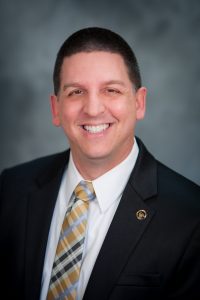
Richard Zraick: School of Communication Sciences and Disorders
Dr. Richard Zraick is Professor and formerly the Founding Director of the School of Communication Sciences and Disorders. He is a Fellow of the American Speech, Language, and Hearing Association. His scholarship of teaching and learning activities focus on two areas of inquiry: (1) healthcare simulation and (2) health communication.
Dr. Zraick began his academic career at a medical sciences campus in the late 1990s. It was then that he first learned about the use of standardized (aka simulated) patients to train medical and nursing students. Curious as to whether standardized patients were being used in the discipline of communication sciences and disorders, he discovered that surprisingly, there were only a few case reports in the literature. Thus began a 20+-year journey of discovery that continues to intrigue him and which has contributed to a paradigm shift in his discipline regarding the use of simulation-based learning environments to develop the clinical skills of students in speech-language pathology and audiology. Dr. Zraick is a leading advocate for the use of standardized patients and shares his research on this topic in international peer-reviewed journals, and he regularly participates in workshops and symposia on the use of best practices in the use of healthcare simulation. Dr. Zraick is one of only a few speech-language pathologists to be recognized as a Certified Health Simulation Educator (CHSE) by the Society for Simulation in Healthcare.
A “clinician at heart” Dr. Zraick has worked as a speech-language pathologist throughout his academic career, bringing decades of clinical experience into the classroom and clinic teaching environments. He has had a long-held concern that many patients struggle with limited health literacy—that is, they exhibit a diminished ability to obtain, comprehend and use health information to make informed decisions. This concern motivates a research and teaching focus on examining the best communication practices of physicians and other healthcare providers when interacting with patients with limited health literacy. Research in this area is interdisciplinary and his collaborators include physicians and nurses, public health educators, medical and other students, and experts in speech communication. Dr. Zraick and his colleagues share their research about health communication and its influence on health outcomes in international peer-reviewed journals and they conduct workshops and seminars for others wishing to learn more. The work of Dr. Zraick and his colleagues is currently taking place within the UCF Student Health Service, and has been particularly relevant given the COVID-19 pandemic and the need for clear healthcare communication.
Professor
School of Communication Sciences and Disorders
College of Health Professions and Sciences
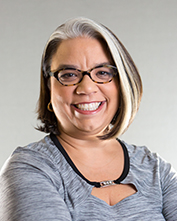
Desiree Díaz: Nursing Practice
Dr. Desiree A. Díaz is an internationally recognized scholar, researcher, and Associate Professor in the College of Nursing. She has been a nurse educator for the past 16 years and was one of the first 20 people in the world to be a Certified Healthcare Simulation Educator – Advanced. She completed a simulation research post-doc with Dr. Pamela Jeffries at Johns Hopkins University related to empathy and caring in simulation. Her research interests have included improving human health, which combines the cutting-edge technology of simulation with the deeper human emotion of empathy to improve the care for underserved patient populations.
Dr. Díaz has a strong focus on research related to teaching and learning pedagogy. She has authored numerous articles and produced grants with her students. Dr.Díaz is a Fellow in the American Academy of Nursing and Academy of Nursing Education. She is a recent FNP graduate, ANCC Board-certified Medical-Surgical Nurse and Certified Nurse Educator. Díaz exemplifies the terms “innovative, interactive, creative and flexible”.
Associate Professor
Department of Nursing Practice
Undergraduate Simulation Coordinator
College of Nursing
Academic Health Sciences Center
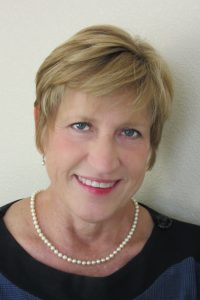
Denise Kay: Educational & Counseling Psychology
Dr. Denise Kay is an Educational Psychologist and self-proclaimed ‘futurist’ who focuses on how current pedagogical approaches foster engagement, not only for today’s students, but for future students. Her recent research focuses on Medical Education, though she has also worked with faculty from other health profession education programs at University of Central Florida and University of Florida to design and deploy an Interprofessional Education curriculum. As an educational psychologist in a medical education setting, she works collaboratively with other faculty on scholarly projects that focus on the design and delivery of educational experiences that are grounded in theories of learning and/or instructional design and that foster student engagement, with a strong preference for instruction that triggers higher order thinking, conceptual change and/or professional identity formation. For example, Learning theories 101: application to everyday teaching and scholarship, provides examples of curriculum design based on each of five major learning theories. Using technology to increase student (and faculty satisfaction with) engagement in medical education reports on medical education research using learning management system features, such as ‘chat’ and ‘like’, to engage medical students in asynchronous, face-to-face and virtual synchronous learning environments. Additional collaborative scholarship projects include:
- Developing a tool for observing group critical thinking skills in first-year medical students: a pilot study using physiology-based, high-fidelity patient simulations, which explored the possibility of validating a checklist for use in identifying evidence of student’s use of critical thinking during high fidelity simulations in medical education.
- What Experiences in Medical School Trigger Professional Identity Development? a qualitative study that used conceptual change theory as a framework for exploring when medical students first begin to ‘feel’ like a doctor in medical school.
- Using Qualitative Methods to Capture the Impact of an Interprofessional Education Event on Students’ Conceptualization of Geriatric Health & Wellness, which used content analysis to capture differences in student’s use of discipline specific terminology before and after an interprofessional education experience.
Dr. Kay’s current research interest includes understanding how medical students’ own lifestyle goal management (initiating and maintaining their own lifestyle change goals) impacts their perspectives of patient adherence to prescribed lifestyle modification recommendations and using Artificial Intelligence to score Observed Structured Clinical Exam Patient Encounter Notes.
Educational & Counseling Psychology
Assistant Professor, Medical Education
College of Medicine
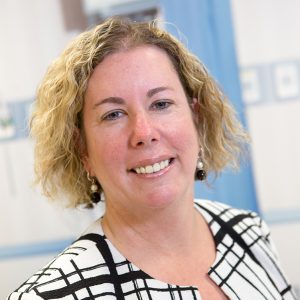
Mindi Anderson: Healthcare Simulation Program
Dr. Mindi Anderson’s program of research focuses on the development and application of simulation and technology, which contributes to the advancement of the science of nursing. Her cumulative body of work surrounding simulation/technology relates to best practices. Much of her twelve years of research focuses on examination of outcomes of the use of simulation and technology in nursing education. Her multifaceted approach to best practices is based in the fundamentals of simulation which includes multiple simulation types/technologies: manikin-based, standardized or simulated patients (SPs), hybrid, computer-based/virtual/augmented reality, and distance/telehealth. Her goal is to determine and set the best practices in education through evaluation of participant outcomes (i.e., knowledge, confidence, effective nurse/patient/team communication, critical thinking, psychomotor skills, etc.). Comparison of one type of simulation over another and intra/interprofessional simulation are additional foci. Her research also includes aspects of the simulation experience, such as realism or debriefing, and care of vulnerable populations, as well as faculty development/standards in simulation. Her research has also led to the development of multiple tools applicable to the implementation and outcome evaluation of simulation pedagogy.
Jacqueline Towson: School of Communication Sciences and Disorders
Dr. Jacqueline Towson’s scholarship of teaching and learning centers on building the capacity of individuals working with young children experiencing language impairments and those considered at-risk through empirical evaluation of innovative interventions and professional learning models. This re[CONTENT TRUNCATED — please restore the remainder from WordPress]